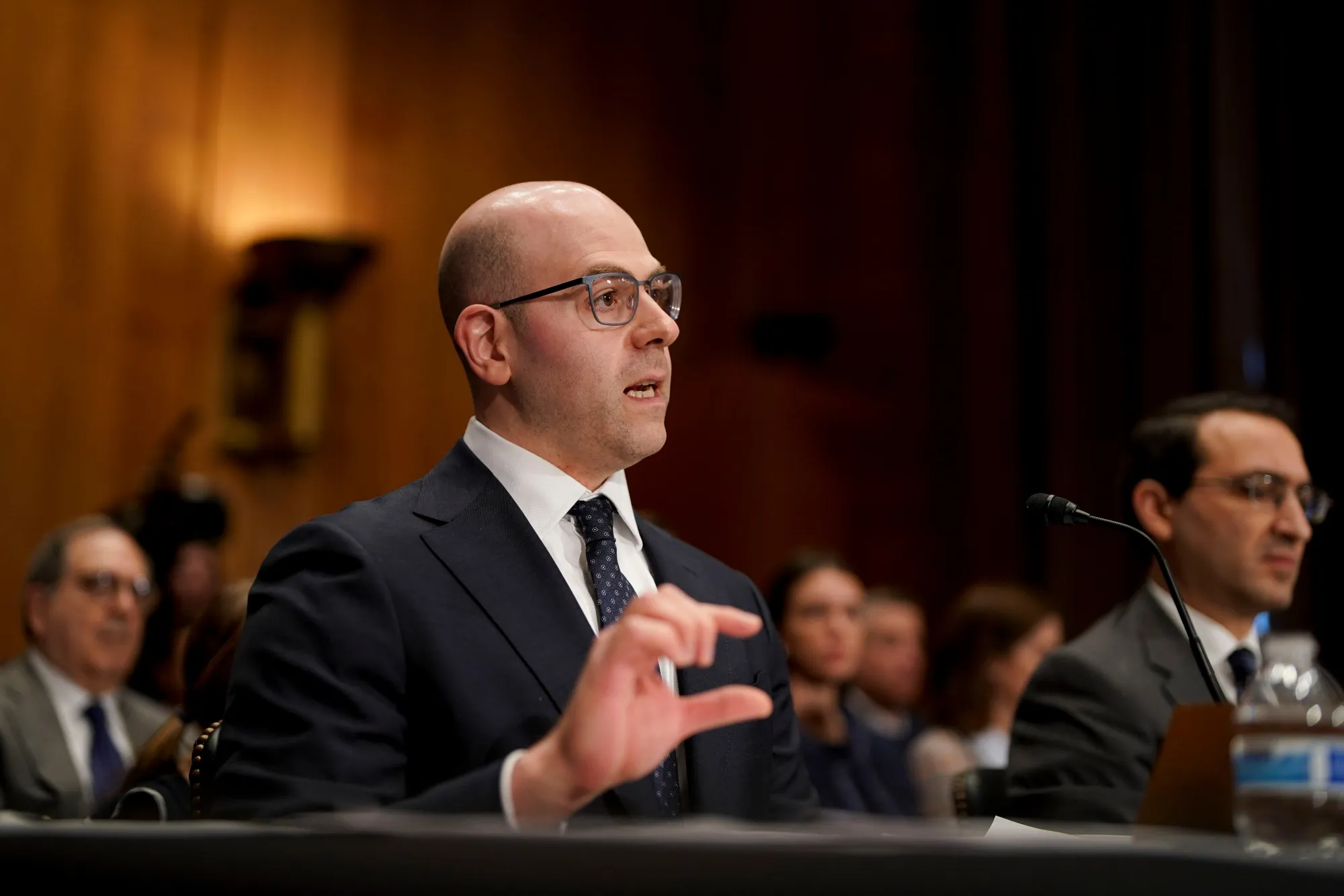
Stephen Ira Miran is an American economist and current chair of the Council of Economic Advisers since March 2025. He is a senior strategist at Hudson Bay Capital Management, a co-founder of the asset management firm Amberwave Partners, and an adjunct fellow at the Manhattan Institute. In December 2024, president-elect Donald Trump named Miran as his nominee for chairman of the Council of Economic Advisers. He was confirmed for the office on March 12, 2025 in a 53-46 vote by the U.S. Senate.
Early life and education
Miran graduated from Boston University in 2005, where he studied economics, philosophy, and mathematics. He received a PhD in economics from Harvard University in 2010, where he was a student of Martin Feldstein.
Career
Treasury senior advisor
Miran served as an advisor of economic policy for the Department of the Treasury from 2020 to 2021, during Steven Mnuchin's tenure as secretary of the Treasury.
Private firms
Miran is a senior strategist at Hudson Bay Capital Management.
Chair of the Council of Economic Advisers
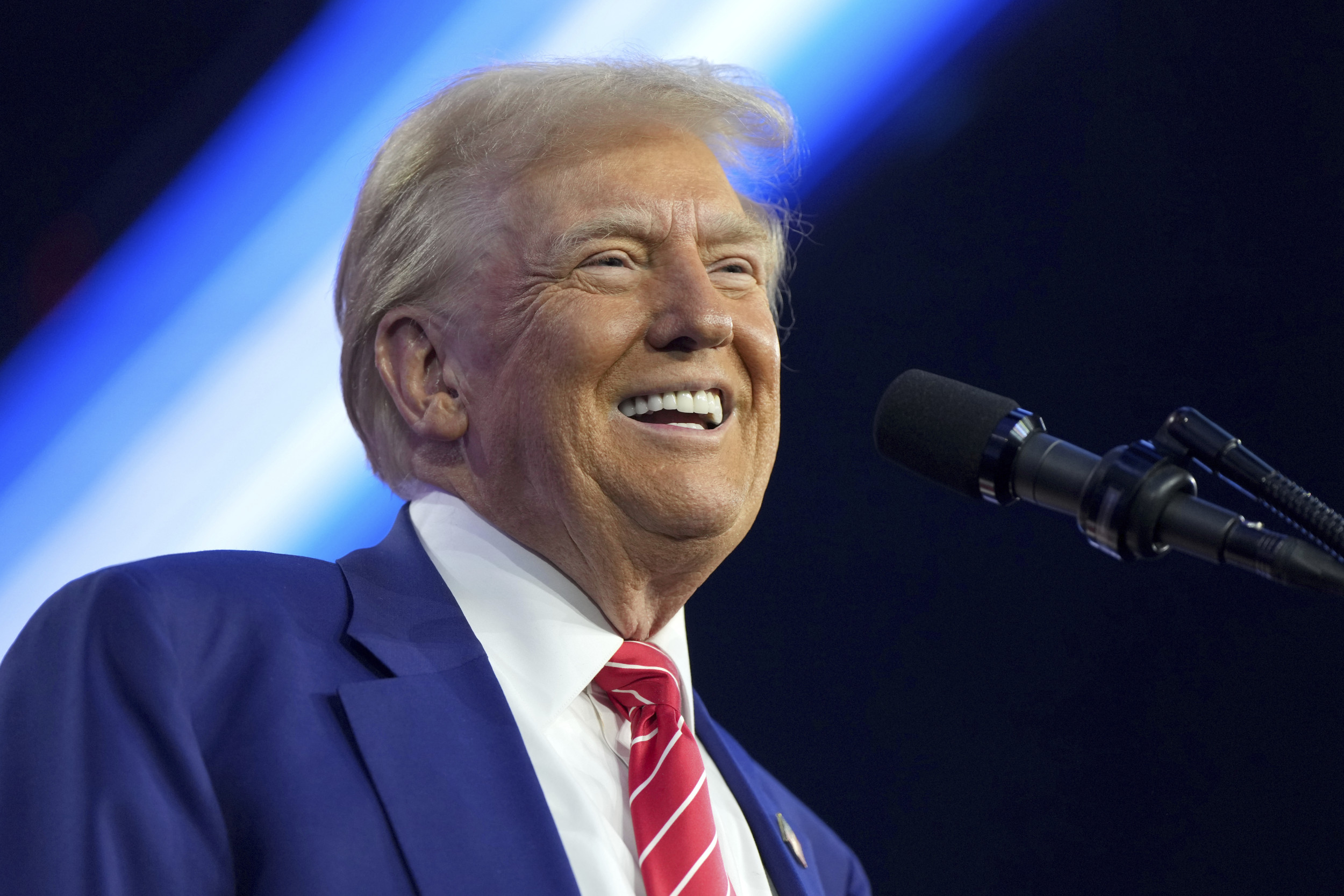
On December 22, 2024, president-elect Donald Trump named Miran as his nominee for chairman of the Council of Economic Advisers. He was confirmed by the Senate for the office on March 12, 2025. He was confirmed in a 53-46 vote. All 53 Republicans voted to confirm him, while all 46 Democrats and independents voted against him. Senator Tammy Duckworth (D-IL) did not vote.
Economic views
Miran was critical of Federal Reserve chair Jerome Powell's recommendation of a major stimulus package in 2020.
In July 2024, Miran co-authored a paper with Iranian-American economist Nouriel Roubini accusing the Department of the Treasury of reducing the share of long-term notes and bonds, lowering yields, and prolonging inflation.
In November 2024, Miran published A User's Guide to Restructuring the Global Trading System, examining tools for reshaping international trade following Donald Trump's reelection. The paper analyzes tariffs and currency strategies in the context of dollar overvaluation, presenting potential market consequences. Analysts have hypothesized that the tariffs in the second Trump administration could be following this paper to end in the so-called "Mar-a-Lago Accord".
Miran's views align with the protectionist economic philosophy of Trump, and he has espoused the use of tariffs as a tool to reduce trade deficits and induce currency revaluations against the dollar. Miran has asserted that the "economic consensus" against tariffs is "wrong," and claims that most tariff models do not account for trade deficits.
References
External links
- Appearances on C-SPAN